Author programming
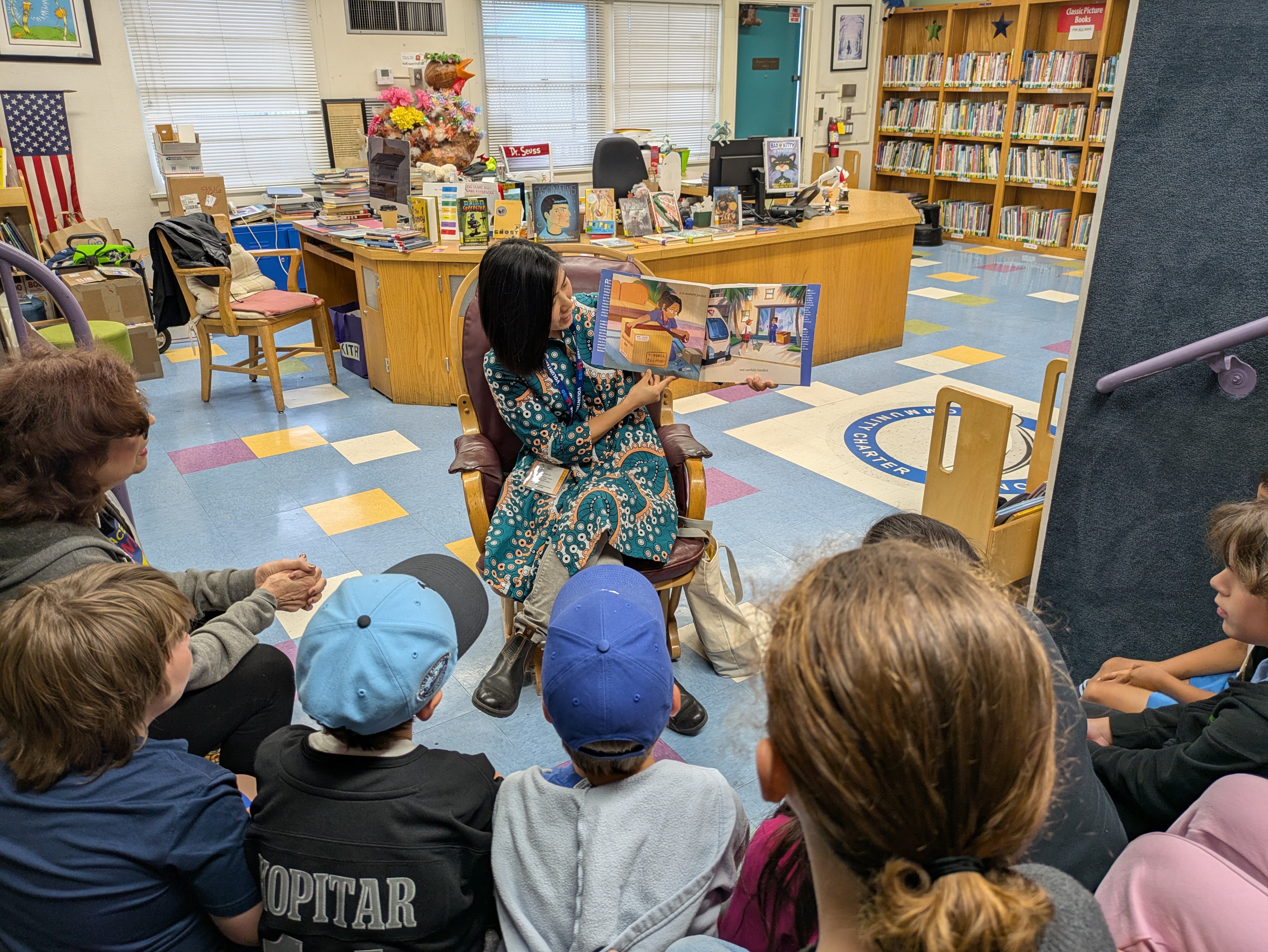
Carren seeks to affirm young people's voices and help them see their unique perspectives as superpowers. She visits classrooms and libraries with storytime, a hands-on activity, and stories of her Chinese and Filipino heritage. She's also glad to talk craft (how 15 years as a journalist taught her to find and shape a true story) and history (how geopolitics affect Filipino American stories).
Her presentations are custom-tailored by age group, suitable from kindergarten through high school. A bilingual speaker, she is glad to present in English or Tagalog.
Presentation topics
From kindergarten classrooms to adult and community groups, I offer a range of talks on storytelling, culture, and the creative process.
What's the Shape of Love?
Carren reads The Shape of Love aloud, then leads a conversation about the balikbayan boxes hiding in the story. She closes with a simple 3D drawing demo: how to turn a flat square into a box on paper, step by step, so kids leave with a drawing (and a new trick) in hand.
Standards tie-in: Supports RL.K–2.7 (relationship between illustrations and story) and early geometry standards (K.G, 1.G identifying and describing shapes). Does double duty across ELA and math.
Love is a Metaphor
Carren reads from The Shape of Love and uses the book as a way into figurative language: how the balikbayan box itself is a metaphor for love that can't be said out loud. She shows a few more examples from favorite picture books, then leads students through writing their own metaphor or simile about something ordinary in their life (a lunchbox, a backpack, a phone call) that stands in for the concept of love.
Standards tie-in: L.4.5a / L.5.5a (interpreting figurative language, including similes and metaphors) and W.4.3 / W.5.3 (narrative writing using descriptive detail).
Boxes Full of Stories: Ideas from Histories
Carren traces how The Shape of Love grew out of a real history: Filipino labor migration to the U.S. (nurses especially), the diaspora economy that built businesses like LBC, and how the balikbayan box became a physical stand-in for love across an ocean. It's part social studies lesson, part author-origin story.
Standards tie-in: Supports RI.6–8.1–3 (analyzing how historical context shapes a text) and pairs naturally with a Grade 6–8 immigration, migration, or Asian American history unit.
From Newsroom to Picture Books
Carren walks through her path from Emmy-nominated journalist to content strategist to debut picture book author. What storytelling skills carried over (finding the human detail, structuring for emotional impact, revising under a deadline) and what had to be relearned (writing for a 40-page container, working with an illustrator instead of a photographer). Major takeaways from this talk include the importance of curiosity and cultivating a growth mindset.
Best for: writing-conference audiences, older students in journalism or media programs, and any “author as career” conversations.
Beautiful Beginnings
Carren reads the opening lines of The Shape of Love alongside a few other picture books, unpacking what makes an opening line do its job — hook, tone, promise. Then, students draft their own opening lines and (if the room's up for it) swap and continue each other's.
Standards tie-in: RL.5.5 / RL.6.5 (analyzing how a text's structure contributes to its meaning) plus W.5-6.3 narrative techniques.
Picture Book Anatomy Lesson
With her background as an editor and writer, Carren walks participants through the jobs that touch The Shape of Love: writer, editor, illustrator, designer, marketer. Optional: students will try their hand at other parts of the publishing process (editing, illustrating, designing, and marketing).
Standards tie-in: RL.K-3.6 / RL.4-6.6 (understanding point of view and the roles of author/illustrator) plus collaborative discussion standards (SL.2-6.1) in the group workshop version.
Powerful Symbols
Carren reads from The Shape of Love and talks about what led her to write a book centered on a specific cultural object — the balikbayan box. She discusses how she decided the box could be the central figure in a story, then opens the question to the room: what's an object or symbol from your own family or culture that you're proud of? Students write or sketch a short reflection on their own symbol.
Standards tie-in: Supports W.5-8.3 narrative techniques (using concrete, culturally-specific detail) and RL.5-8.4 (analyzing symbolism and word choice).
How To Fight Procrastination as a Creative
A tight, practical talk on time management specifically for creative work. How Carren structures deadlines for herself as a freelancer/author when no one else is enforcing them, what she does when a project stalls, and a few concrete habits that keep a manuscript moving.
Best for: Practical/career-skills talk, session at a writing conference, add-on to a longer school visit.
Custom Topic
Have something else in mind? Work with Carren to craft a presentation that suits your needs.
Formats
Custom Q&A Video
Free · up to 10 min
Reading one of Carren's books with your class or book club? Email your questions and Carren will record a personal video answering them, posted just for you on YouTube.
Virtual Storytime
20 min
A read-aloud of The Shape of Love over video call, perfect for story time circles and younger audiences who want a quick, warm dose of the book.
Virtual Visit + Q&A
30–45 min
A relaxed video chat with no formal presentation required — just Carren, your group, and an open conversation about the book, the writing process, or whatever's on their minds.
In-Person Presentation and Activity
A full author visit built around one of Carren's presentation topics (see above), paired with a hands-on activity so students leave with tactile reminder of what they learned.
If budgets are tight, don't hesitate to ask for a negotiated fee. Every young person deserves the chance to be heard, regardless of circumstance. Email carren [dot] jao [at] gmail.com.